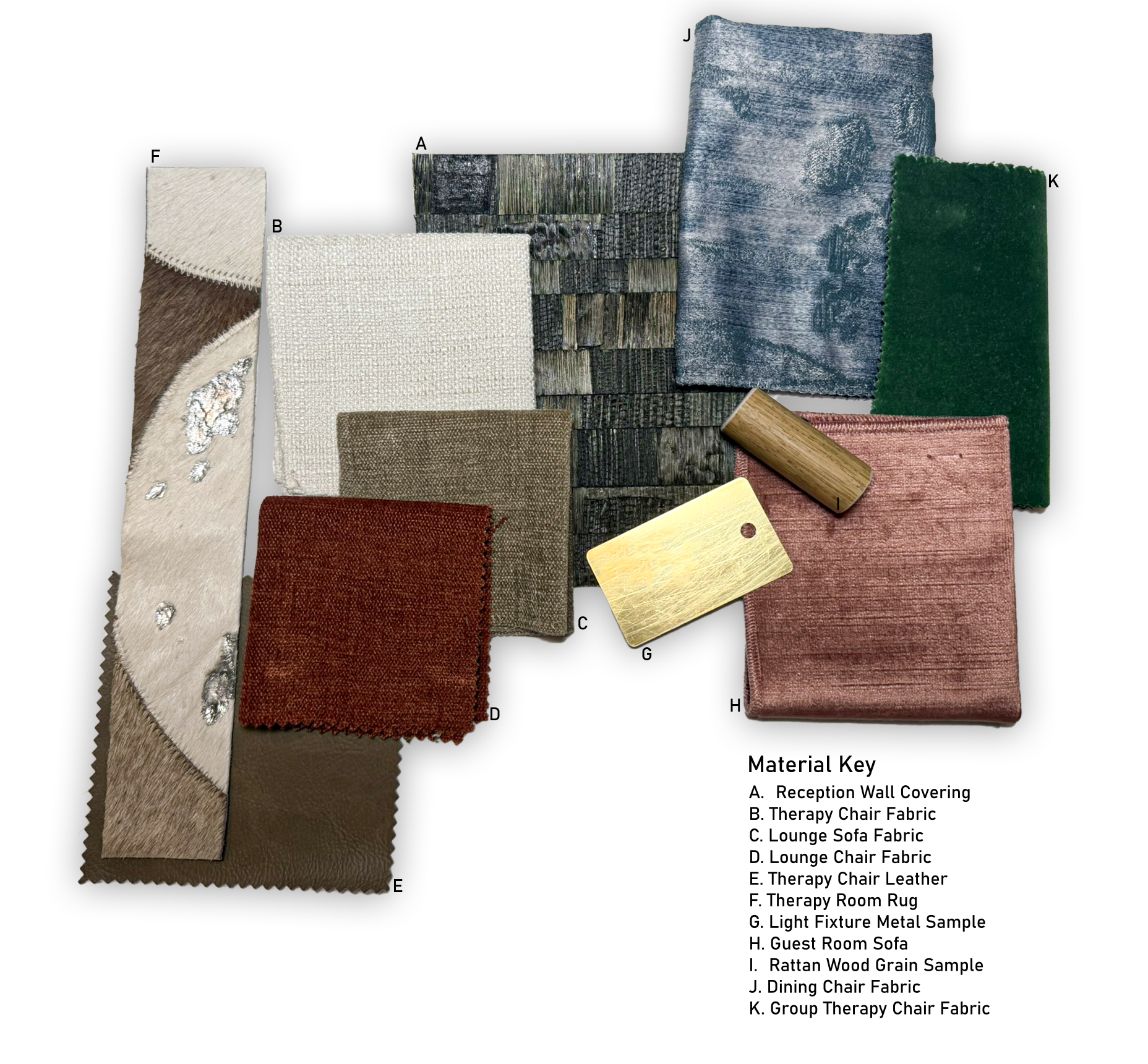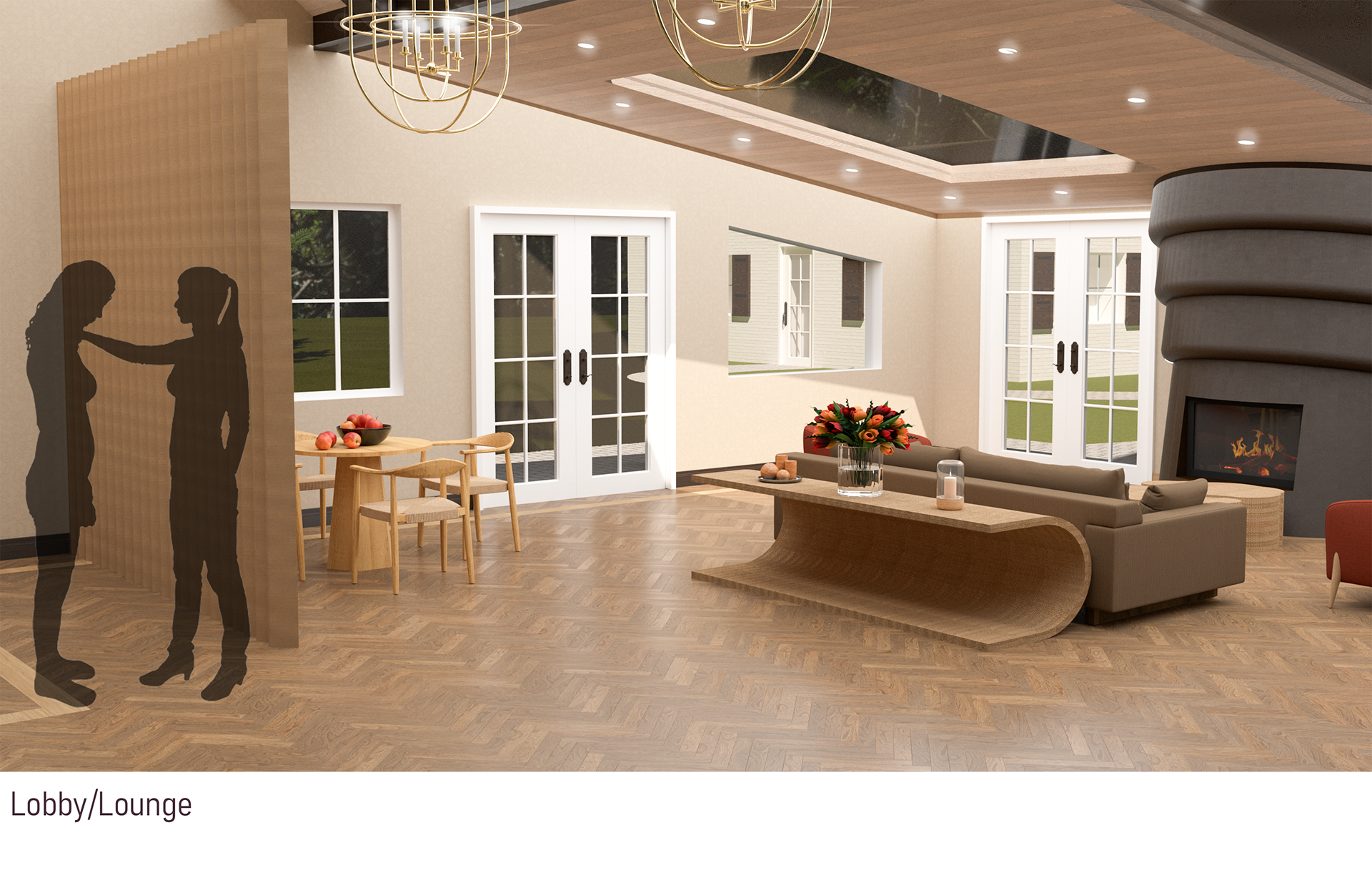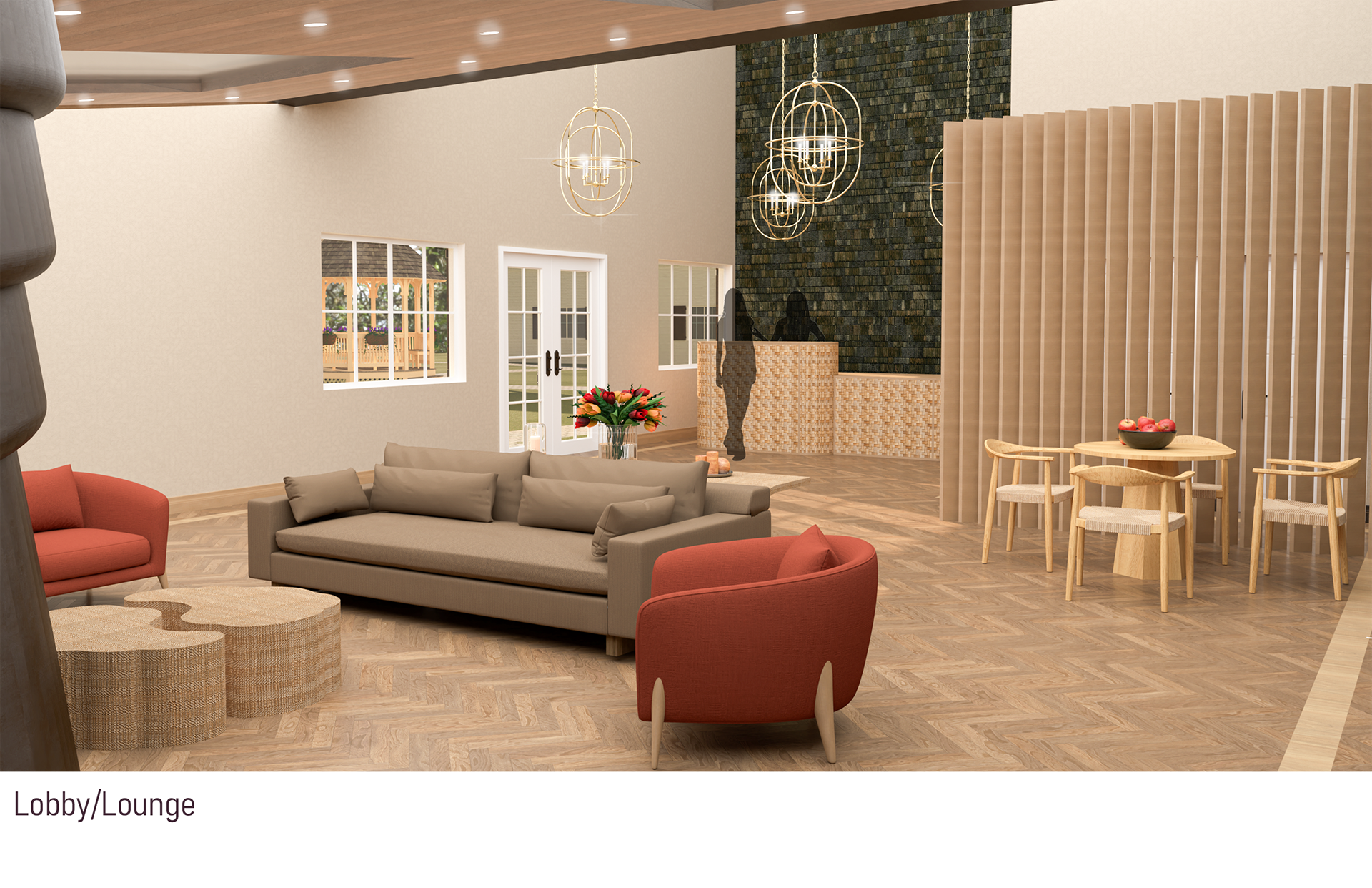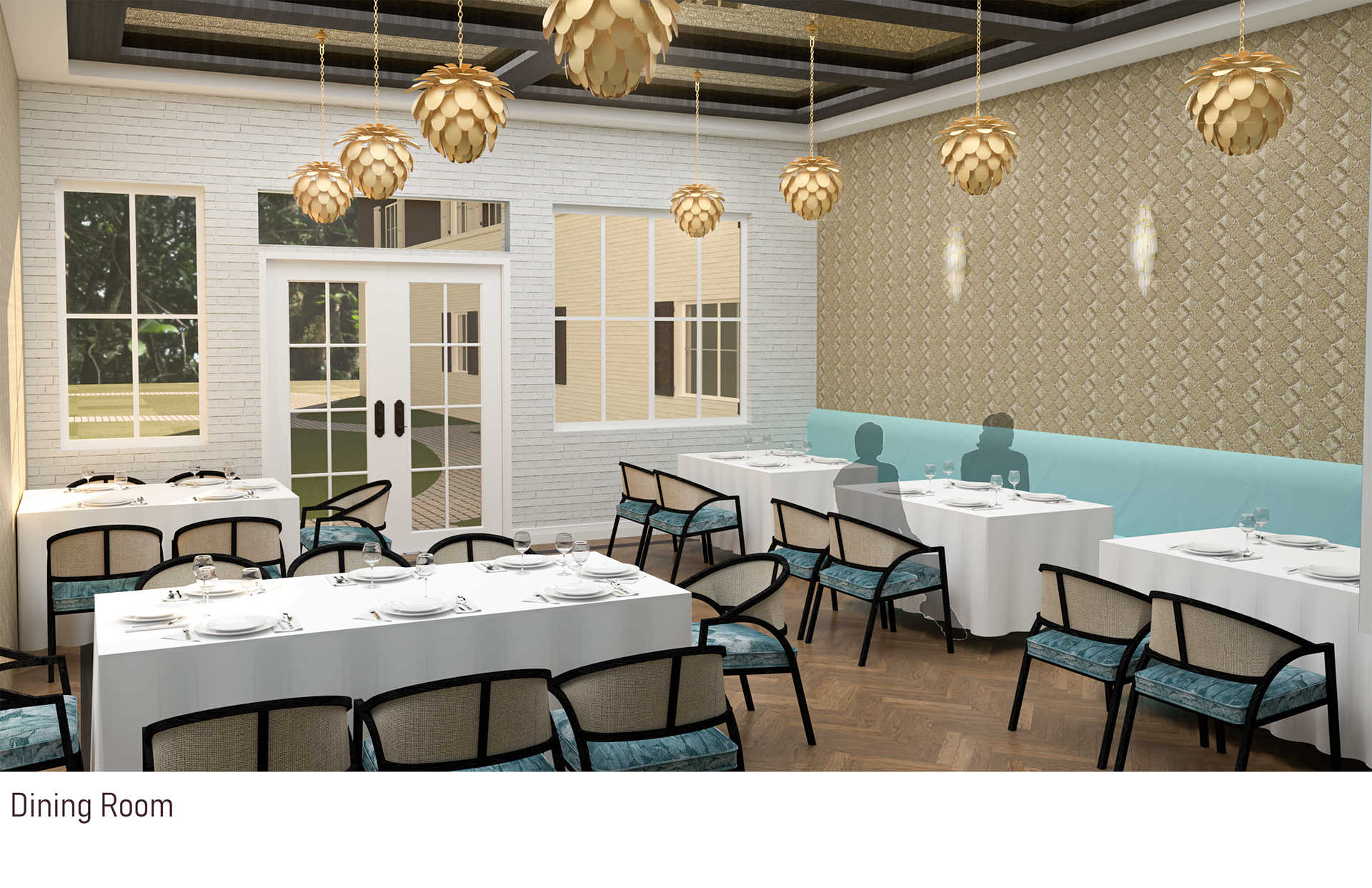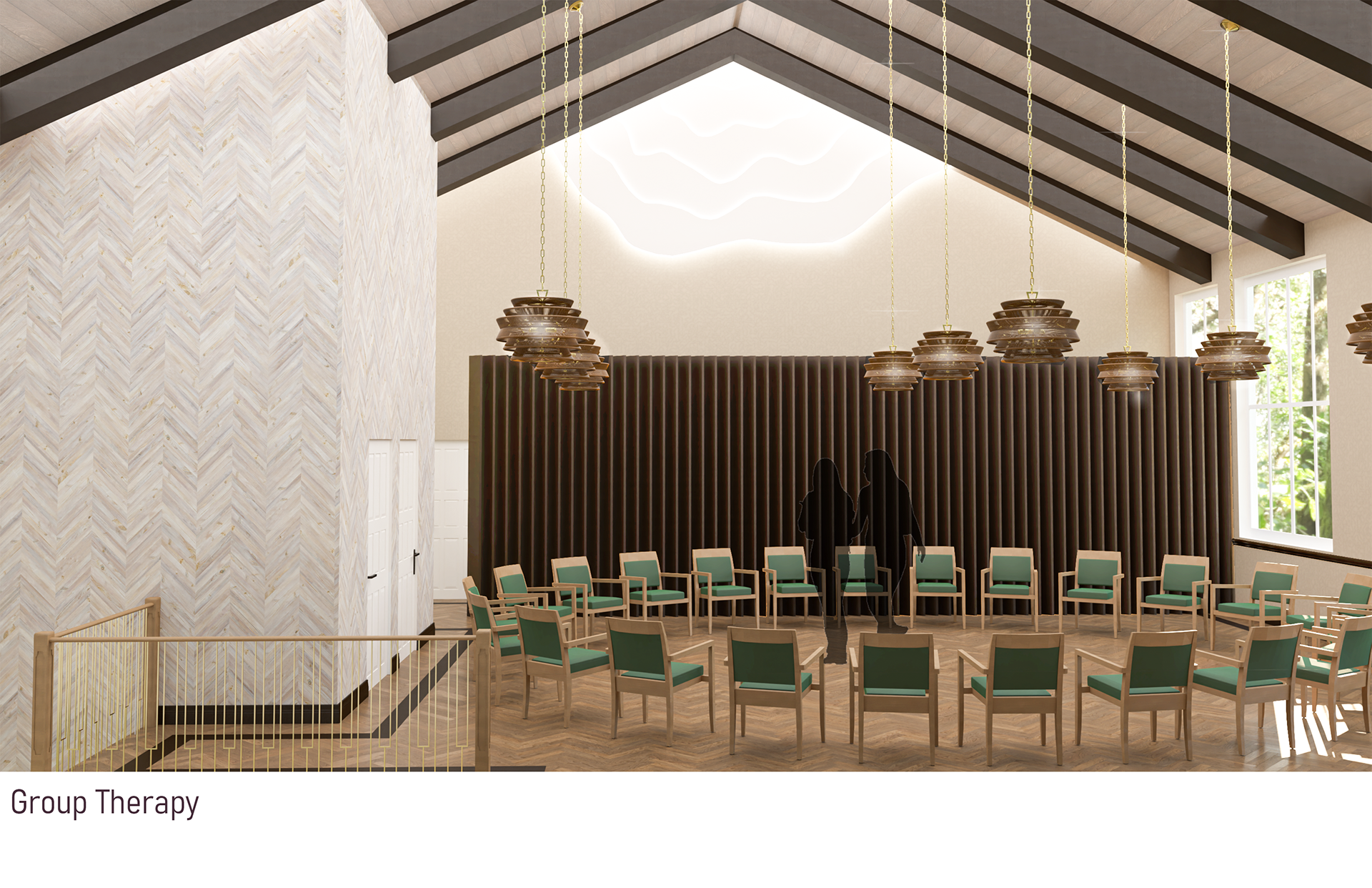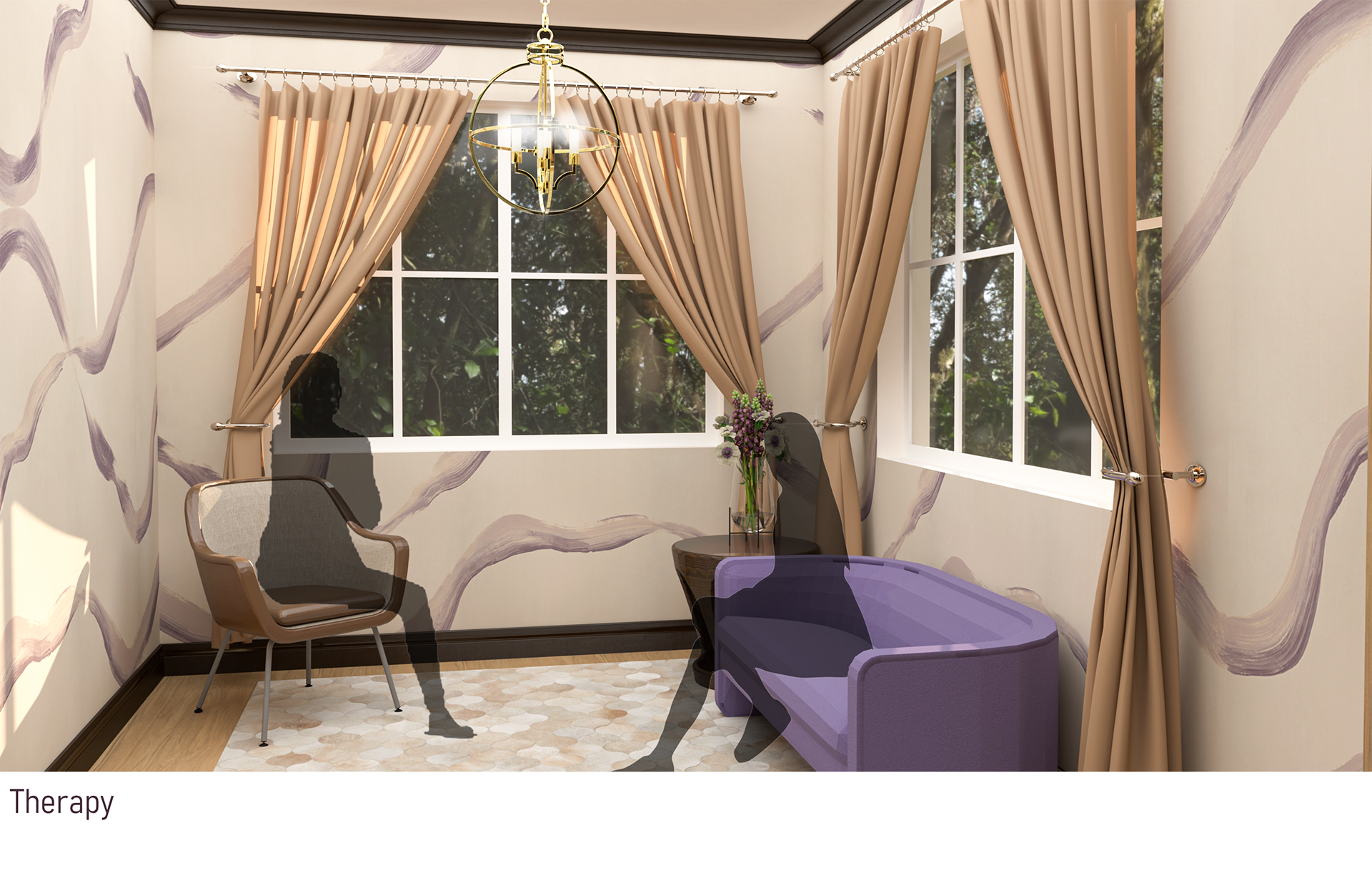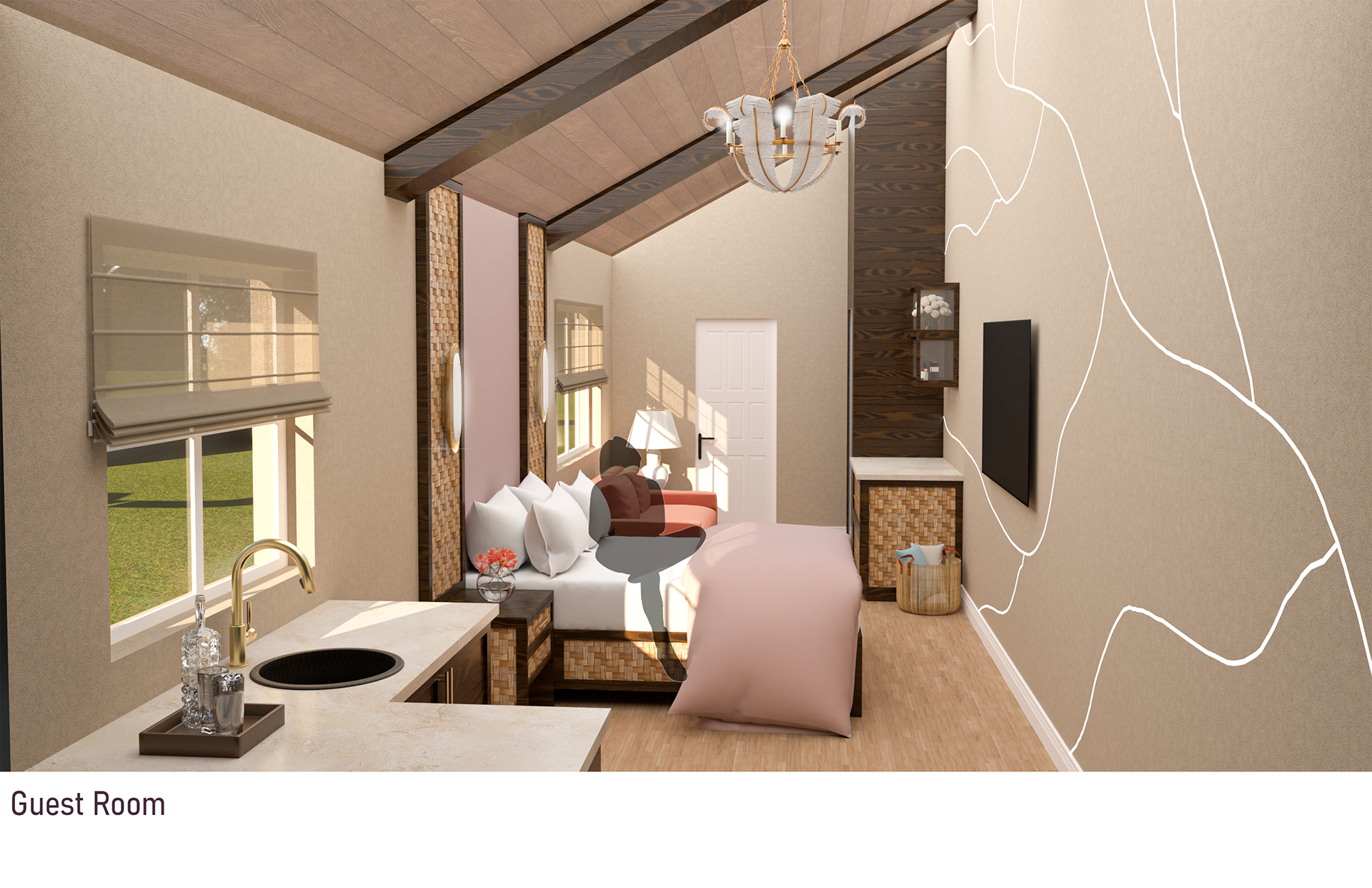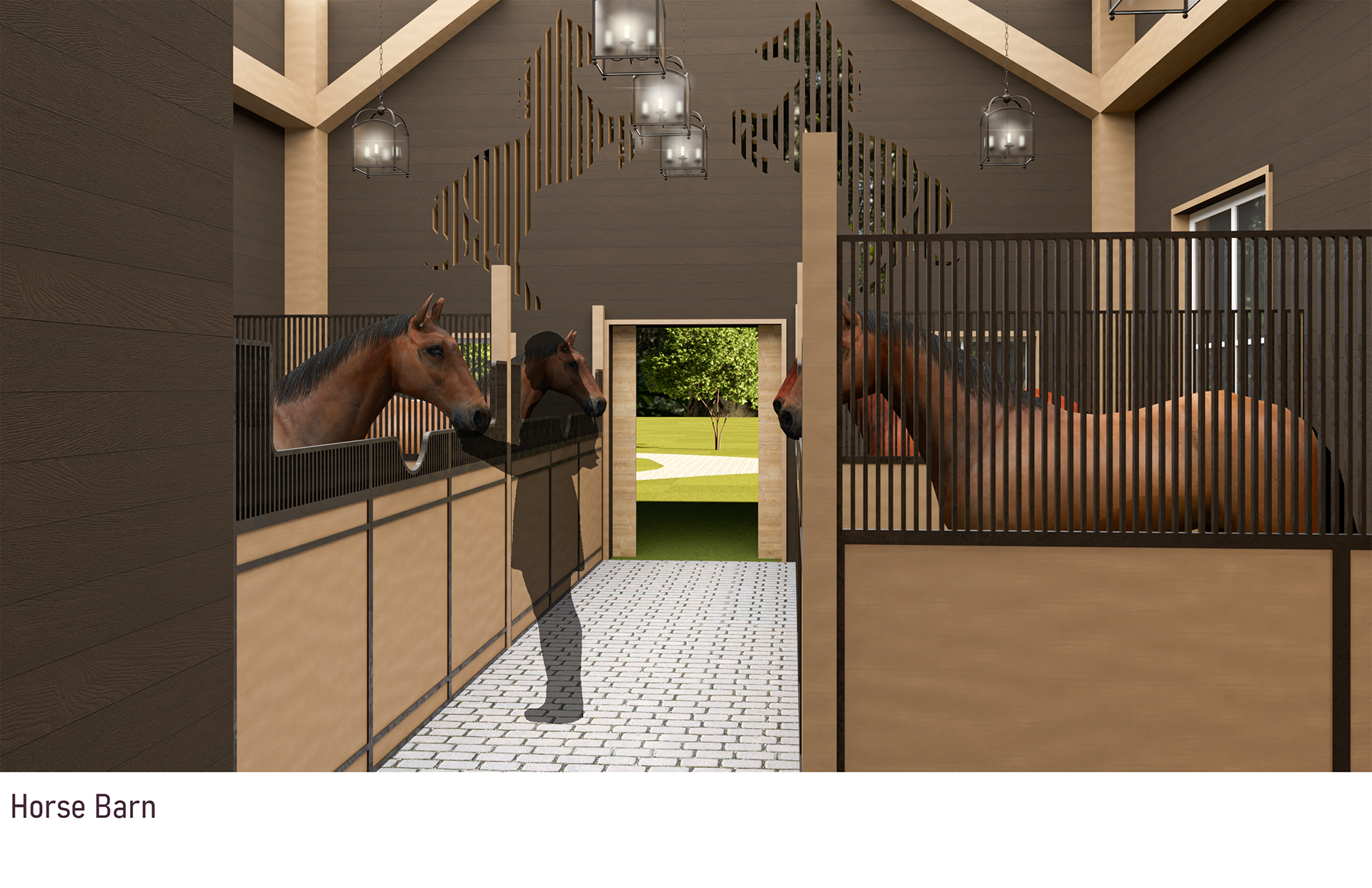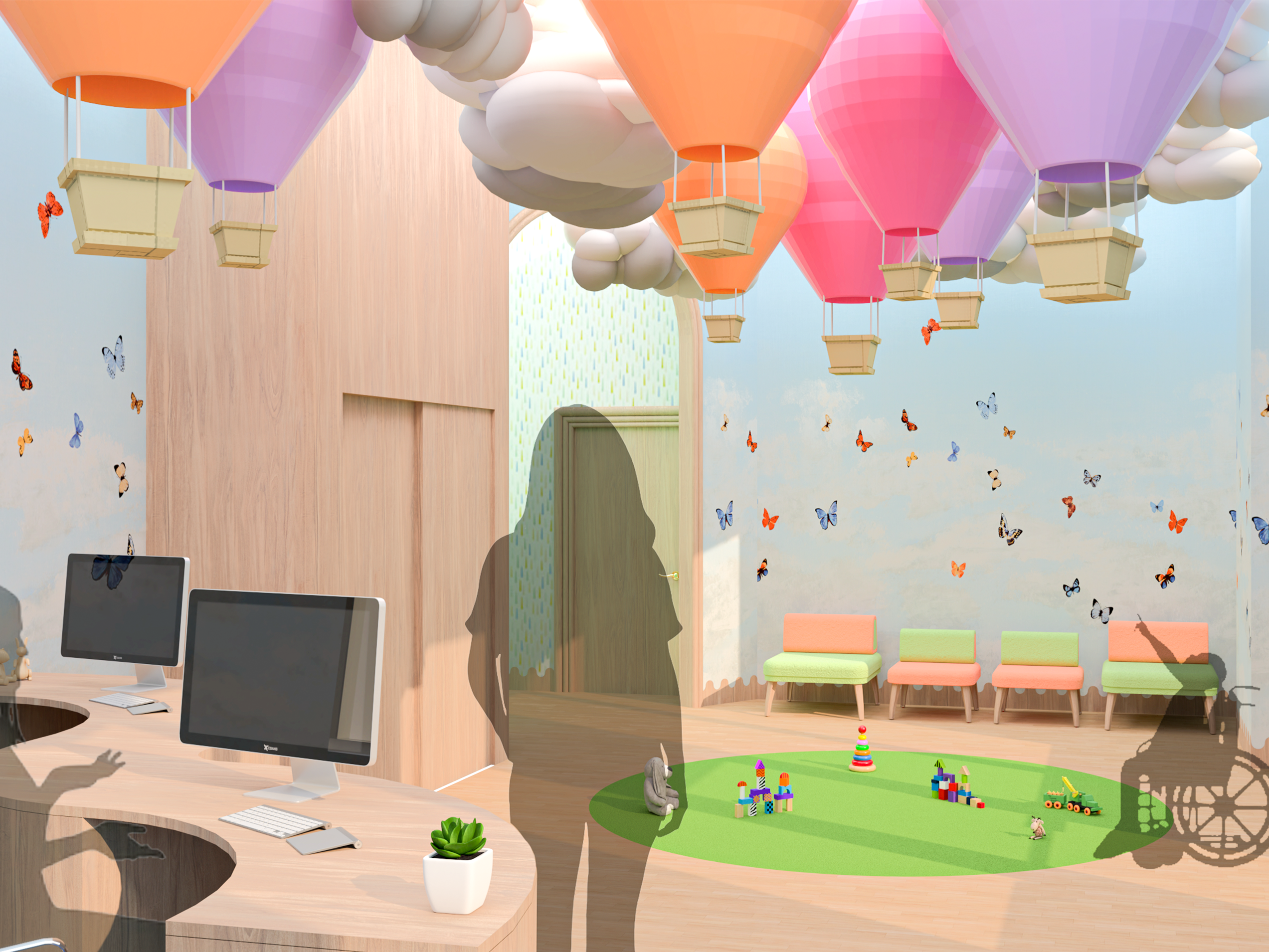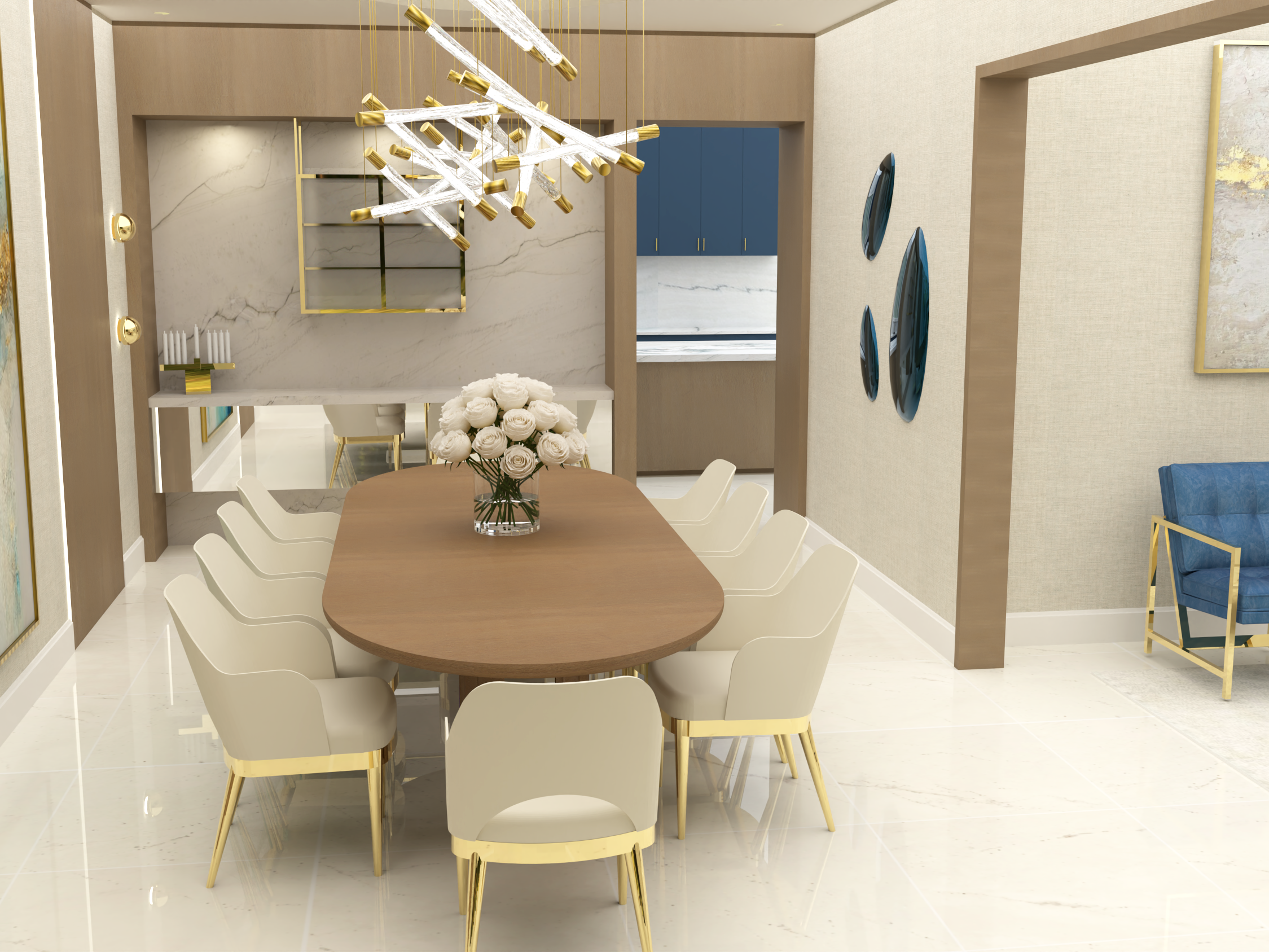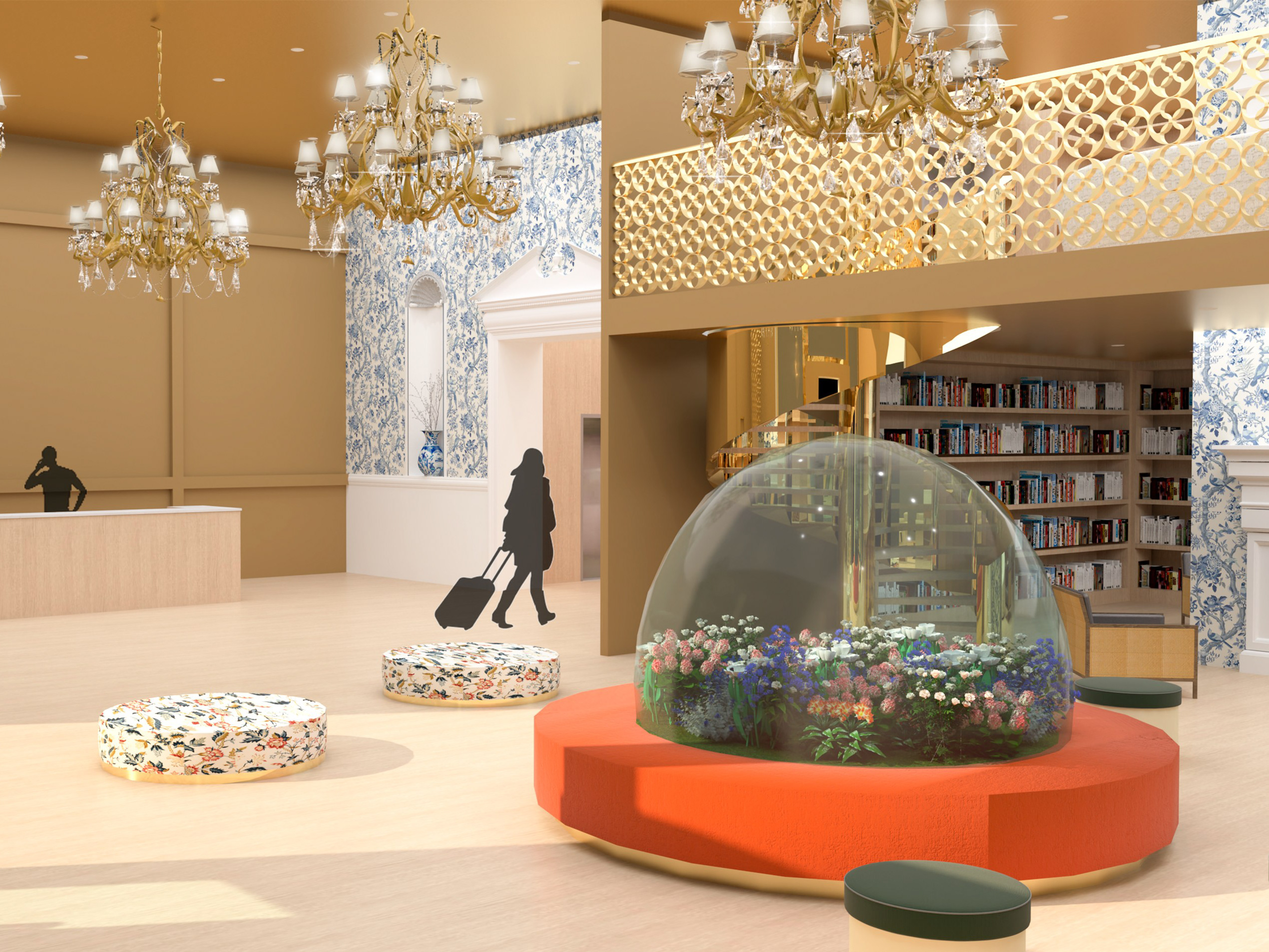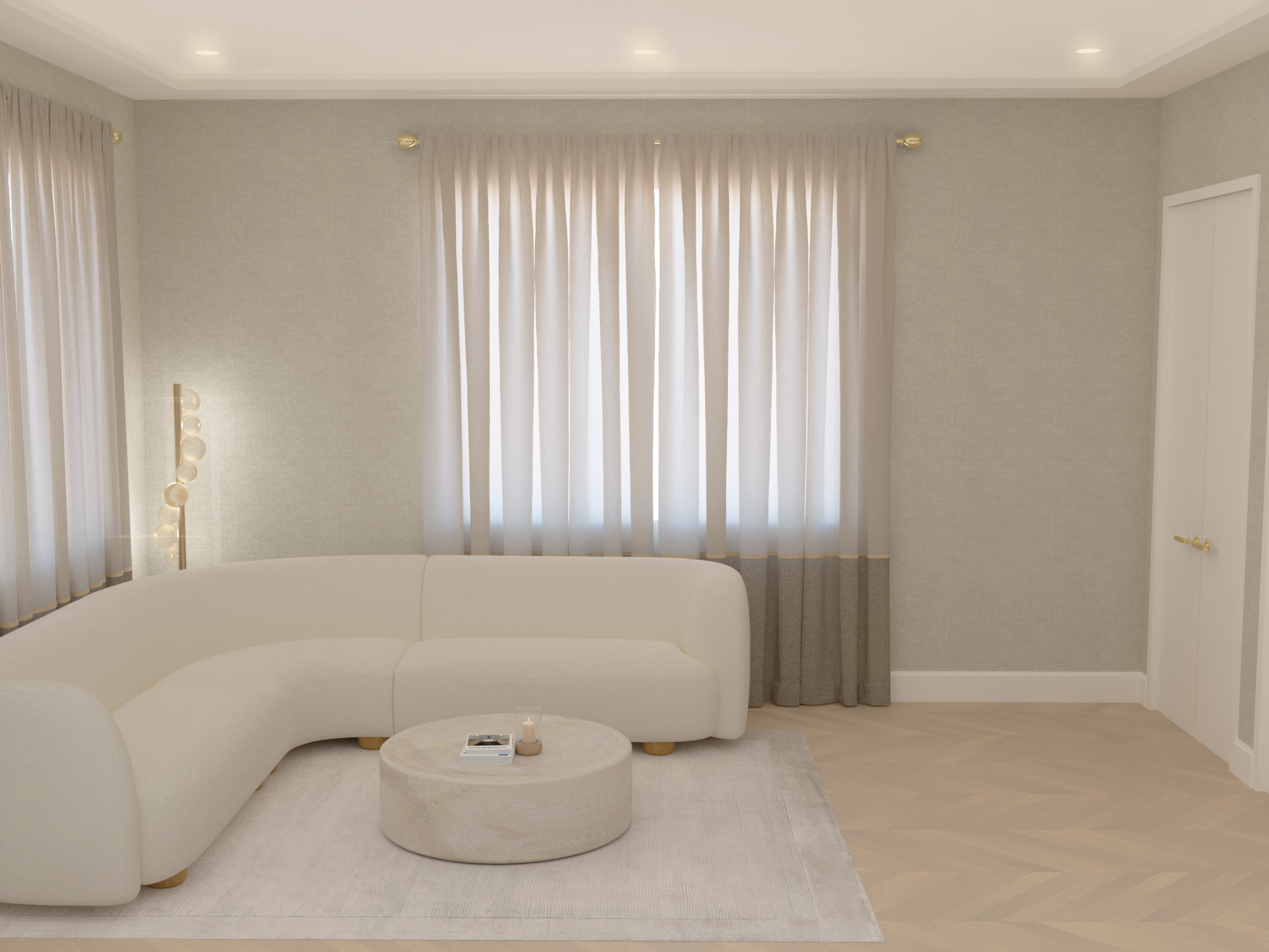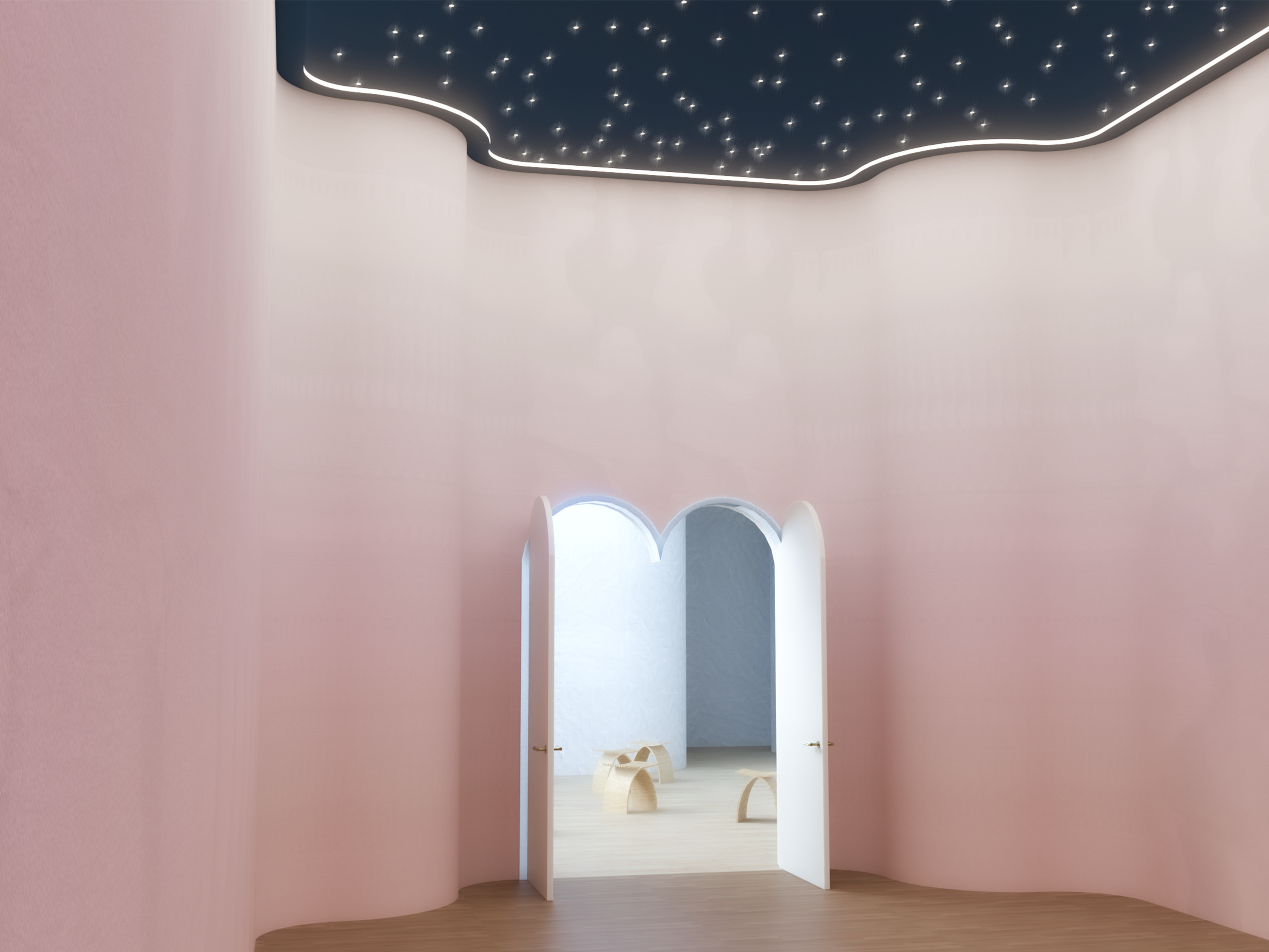
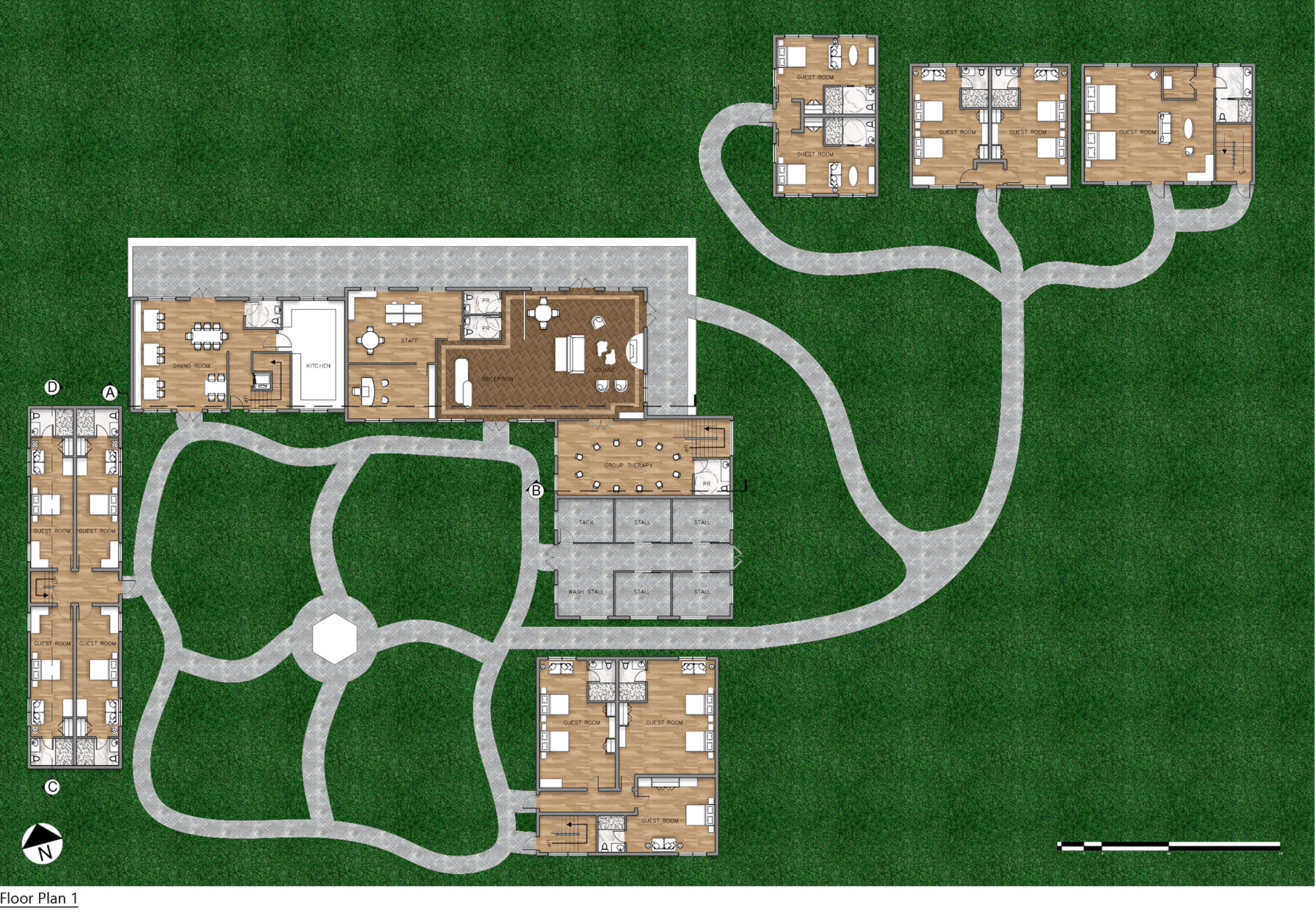
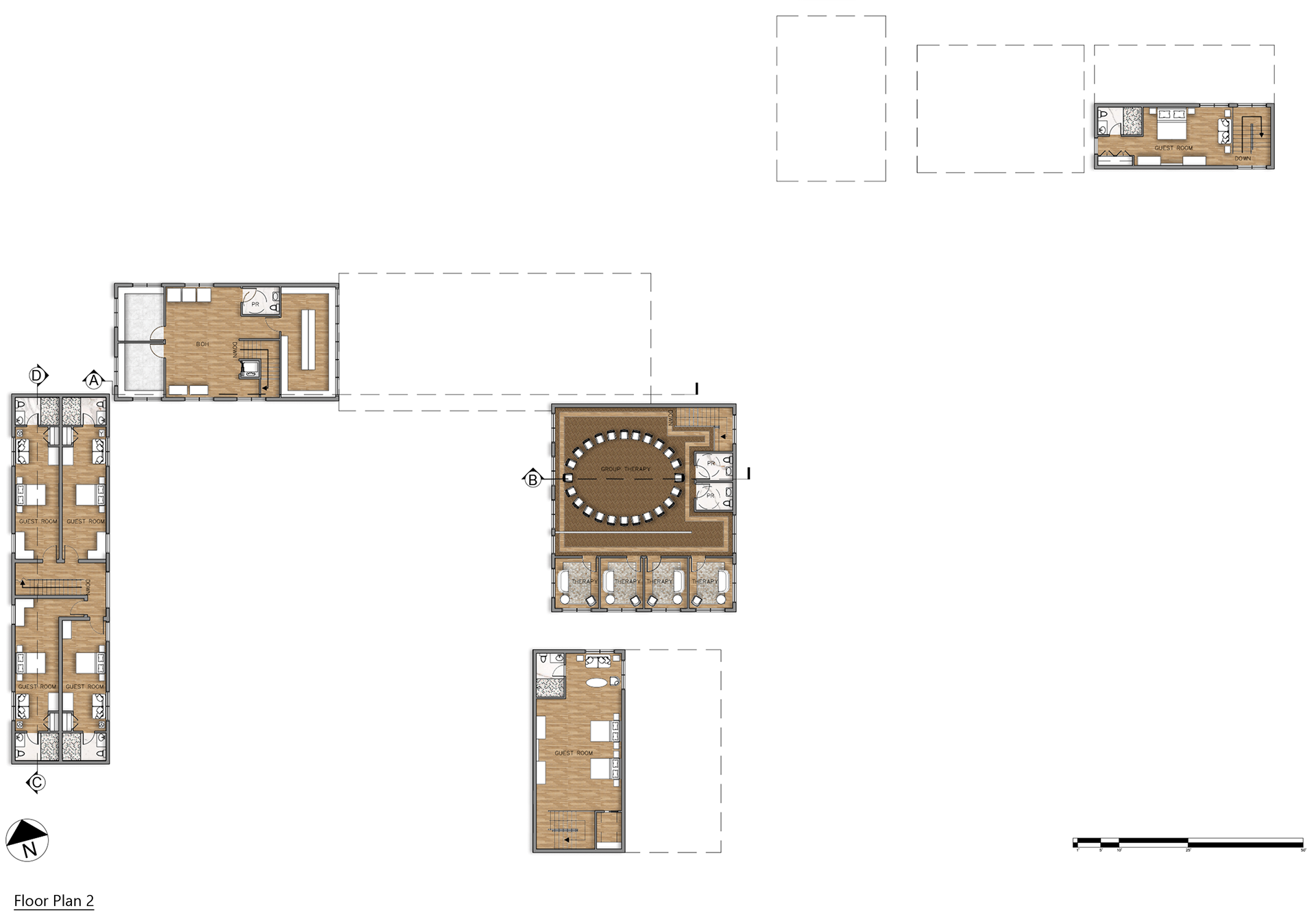
This project will be exploring the design of a women's trauma retreat center nestled in a setting embedded in nature. This sanctuary is meticulously crafted to provide a safe haven for healing,integrating elements such as equine therapy to ground and empower. Inspired by nature, the interiors offer guests a haven away from their lives, fostering community and offering constructive engagement for women on their journey toward renewal and recovery.

Research Insights
Principles
Trauma-informed design is guided by the principles of safety, choice, trust, and empowerment. Research emphasizes the importance of creating environments that minimize triggers and support autonomy. Calming aesthetics—including natural light, biophilic elements, and subdued color palettes—promote psychological ease, while clear wayfinding reduces disorientation and stress. A balance between physical security and perceived safety is critical; environments that feel overly institutional can inadvertently undermine healing.
Program
Needs Studies demonstrate that creative expression through art and performance facilitates emotional processing and empowerment. Physical activity, such as exercise or self-defense, has been shown to reduce PTSD symptoms while fostering confidence. Animal-assisted interventions, particularly equine therapy, enhance grounding and instill a sense of responsibility, control, and self-worth through interaction with animals.
Community Healing
Evidence highlights the role of communal environments in reducing isolation and reinforcing recovery. Shared dining, therapy, and activity spaces allow survivors to develop supportive networks, validate experiences, and practice self-care within a safe collective. Case studies, such as the Ada and Tamar House in Tel Aviv, demonstrate the efficacy of a “kibbutz-style” model that combines private living quarters with communal resources to foster resilience.